Aluminum scaffolding
Applications:
Commercial building maintenance
Industrial plant repairs
Mall & showroom interior works
Painting and plastering jobs
HVAC and electrical installations
Common Specifications:
| Feature | Specification Example |
|---|---|
| Frame Height | 1.5 m – 2 m |
| Platform Width | 0.6 m – 1.2 m |
| Load Capacity | 200–300 kg |
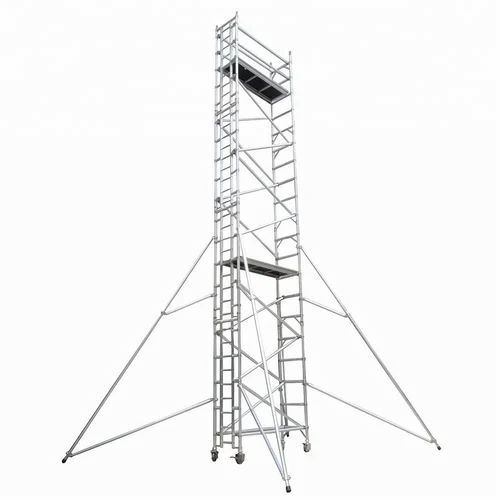
| Platform Height Range | Up to 12 m (with guardrails) |
| Material | High-strength aluminum alloy |
Description
Aluminum scaffolding is a lightweight, durable, and corrosion-resistant type of scaffolding widely used in construction, maintenance, and industrial work. Here’s a detailed overview that can help you describe, promote, or better understand aluminum scaffolding
What is Aluminum Scaffolding?
Aluminum scaffolding is a temporary elevated platform made from high-grade aluminum alloy. It is used to provide safe working access at heights and is known for being:
Lightweight – Easy to move and assemble
Rust-free – Ideal for both indoor and outdoor work
Durable – Strong structure with high load-bearing capacity
Portable – Often comes in foldable, mobile (with wheels), or modular designs
Benefits of Aluminum Scaffolding:
Quick Installation – Saves time due to easy locking systems
Safety Features – Non-slip platforms, guardrails, and toe boards
Low Maintenance – No rust or corrosion problems
Versatile Use – Suitable for painting, electrical work, facade repair, etc.
Compact Storage – Can be dismantled and stored in less space
Types of Aluminum Scaffolding:
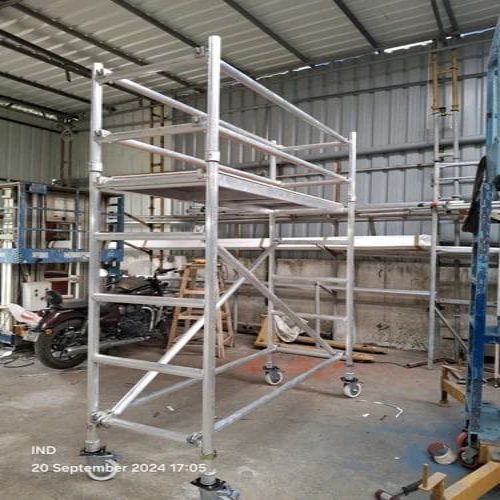
Mobile Aluminum Scaffolding Towers
With wheels for easy movement
Common in maintenance and MEP work
Folding Scaffolding
Easy to carry and ideal for indoor tasks
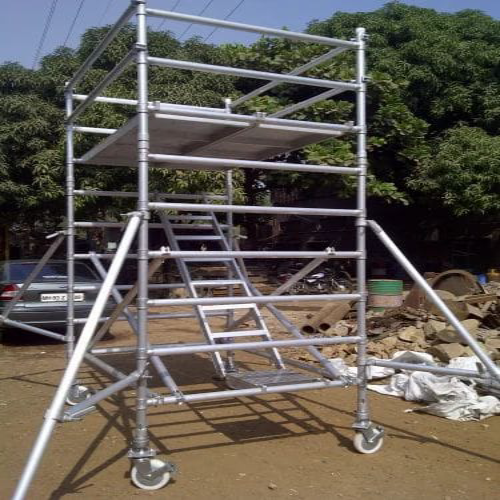
Stairway Scaffolding
Built-in ladders or stair access for tall projects
Cantilever Aluminum Scaffolding
For working over obstacles like glass facades